
Children develop through a combination of education, relationships, play, health care, creative experiences, and opportunities to explore their interests. As children move through different stages of development, their needs can change considerably. A learning environment that works well for a young child may not provide the same benefits several years later, while new interests and abilities can open doors to different educational and enrichment opportunities.
Parents and caregivers often have many resources available, but choosing among them requires more than looking at convenience or popularity. The right options should reflect a child’s age, personality, abilities, interests, learning preferences, and individual circumstances. Families may also need to consider schedules, accessibility, costs, transportation, and the amount of support a child requires.
A thoughtful approach involves looking at the whole child rather than focusing on one area of development. Academic instruction, creative activities, physical health, social experiences, and opportunities for independence can all contribute to a well-rounded childhood.
Evaluate Educational Environments Based on Individual Learning Needs
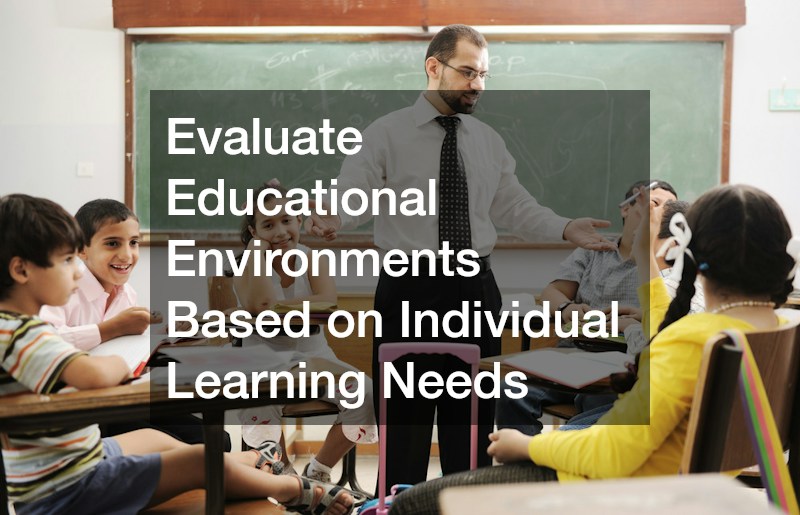
Choosing an educational environment starts with understanding how a child learns and what type of setting allows that child to participate comfortably and productively. Parents can consider academic strengths, areas that need additional support, preferred learning activities, social preferences, and interests when evaluating potential schools.
Families considering private schools can look beyond general academic offerings and examine how a particular school approaches individual student development. A school may provide specialized classes, extracurricular activities, smaller instructional settings, or additional resources that fit a child’s needs.
Before making a decision, consider:
- Class sizes and student-to-teacher ratios
- Curriculum structure and academic expectations
- Available enrichment programs
- Student support services
- Communication between educators and families
- Opportunities for extracurricular participation
Visiting a school can provide information that is difficult to obtain from a website or brochure. Parents can observe the learning environment, ask how teachers address different learning needs, and discuss how students receive support when they encounter challenges. It is also useful to consider whether the school’s approach is likely to remain appropriate as the child progresses through different grade levels.
Consider School Values and Educational Priorities Carefully
Educational decisions often involve more than curriculum and academic performance. Families may also have specific preferences concerning classroom culture, school policies, extracurricular activities, student expectations, and the role of families in the educational process. Identifying these priorities in advance can make comparisons more productive.
When evaluating a non-religious private school, parents can examine how the school’s stated educational philosophy is reflected in everyday instruction and student life. Reviewing course offerings, behavioral policies, extracurricular programs, and opportunities for student participation can help families understand the overall environment.
Useful questions to ask include:
- What subjects receive the greatest instructional emphasis?
- How does the school approach different learning styles?
- What extracurricular activities are available?
- How are students supported when they struggle academically?
- How are families kept informed about student progress?
- What opportunities exist for students to develop independence?
Parents should avoid making a decision based on one feature alone. A school may have attractive facilities or an appealing curriculum, but the daily learning experience should also fit the child’s personality and developmental needs. Comparing several aspects of an educational environment can help families develop a more complete picture before making a commitment.
Encourage Creativity Through Structured Artistic Opportunities
Creative activities can give children opportunities to communicate ideas, develop discipline, work with others, and gain confidence in unfamiliar situations. Music, theater, dance, and related activities can also encourage children to practice skills repeatedly while learning how individual effort contributes to a larger project.
For families interested in performing arts private schools, it can be helpful to examine both the artistic and academic components of the program. A child who enjoys performing may benefit from an environment where creative interests receive meaningful instructional time, but academic development remains an important consideration.
When comparing arts-focused programs, review:
- Types of performing arts offered
- Instructional and rehearsal schedules
- Performance opportunities
- Academic course requirements
- Opportunities for beginners and experienced students
- Expectations surrounding participation and practice
Children should have room to explore creative interests without feeling that every activity must lead to competition or professional performance. Parents can ask children what they enjoy about an activity and whether the schedule feels manageable.
Creative development is often most valuable when children have opportunities to experiment, make mistakes, receive constructive feedback, and discover areas where they want to improve.
Choose Childcare That Supports Development and Daily Routines
For younger children, a quality daily environment can contribute to social, emotional, language, and cognitive development. Families should therefore evaluate childcare based on more than operating hours or proximity. The program’s routines, activities, caregiver interactions, and approach to age-appropriate learning all deserve consideration.
Parents can ask how children spend a typical day and whether activities are structured around their developmental stages. Young children generally benefit from a balance of guided activities, free play, movement, conversation, creative experiences, and quiet periods.
Important factors to compare include:
- Caregiver qualifications and experience
- Group sizes and staffing arrangements
- Daily schedules and routines
- Indoor and outdoor activities
- Communication with parents
- Safety and emergency procedures
Consistency can be particularly valuable for young children. Predictable routines can help them understand what to expect throughout the day while gradually developing independence. Families should also consider how the program handles changes in a child’s needs, such as transitions between age groups or new developmental milestones.
Explore Career Education Through Age-Appropriate Experiences
Career exploration does not have to begin with choosing a specific profession. Older children and teenagers can start learning about different fields by identifying interests, researching occupations, participating in extracurricular activities, and learning what education different careers require.
For students interested in personal care, beauty, or wellness, esthetician schools can provide an example of how specialized education connects classroom instruction with practical career skills. Parents can encourage teenagers to research what these programs teach, what prerequisites may apply, and what types of work graduates may pursue.
Career exploration can include:
- Researching different occupations
- Interviewing professionals about their work
- Comparing educational requirements
- Participating in relevant school activities
- Developing practical and communication skills
- Learning about potential career environments
The goal should be exploration rather than pressure. A teenager’s interests can change as they gain new experiences, and that flexibility is a normal part of development. Parents can support the process by helping children identify questions and find reliable information rather than deciding on a career for them.
Build Consistent Dental Habits From an Early Age
Oral health is an important part of a child’s overall well-being and can affect comfort, eating, speaking, and daily routines. Establishing good habits early can make brushing and other oral care activities a normal part of childhood rather than an occasional task that requires repeated reminders.
Parents can help by establishing consistent routines and demonstrating appropriate brushing and flossing techniques. Regular dental appointments also give families opportunities to discuss changes in oral health and receive guidance that is appropriate for the child’s age.
Families can support good habits by:
- Making brushing part of the morning and bedtime routine
- Helping younger children with brushing when necessary
- Encouraging appropriate flossing habits
- Limiting frequent sugary snacks and drinks
- Keeping regular dental appointments
- Discussing oral health in positive, age-appropriate terms
A kids dentist can also help children become more comfortable with professional dental care. Parents can prepare children by explaining what a routine visit involves without creating unnecessary anxiety.
As children become more independent, parents can gradually shift responsibility for daily oral care while continuing to supervise when appropriate. Consistent routines and regular professional guidance can help children develop habits they can carry into adolescence and adulthood.
Monitor Changes in Dental Development as Children Grow
Children’s mouths change significantly as they grow, particularly as primary teeth are replaced, and permanent teeth develop. Parents may notice changes in spacing, tooth position, or bite that raise questions about whether additional evaluation could be useful.
Pediatric orthodontists can evaluate developing teeth and jaws and may recommend monitoring over time depending on the child’s circumstances. An evaluation does not necessarily mean that immediate treatment is needed. In some cases, observation can provide useful information about how development is progressing.
Parents can pay attention to:
- Significant crowding or overlapping teeth
- Unusual spacing between teeth
- Changes in how the upper and lower teeth meet
- Difficulty biting or chewing
- Teeth that appear unusually positioned
- Changes noticed during routine dental visits
Keeping regular dental appointments can help families monitor changes and discuss concerns as they arise. Parents should avoid trying to diagnose orthodontic problems independently based on photographs or isolated observations.
Learn About Resources That Address Disability-Related Needs
Children with disabilities may require additional educational, accessibility, or community resources to participate fully in school and other activities. Families can benefit from keeping organized information about evaluations, accommodations, educational plans, communications, and services connected to the child’s needs.
When questions involve disability rights or access to appropriate services, local disability lawyers can be one source of professional information for families trying to understand their legal options. Legal questions are separate from educational or medical decisions, so parents may need to communicate with several types of professionals depending on the circumstances.
Families can organize important information by keeping:
- Copies of evaluations and educational documents
- Records of accommodation requests
- Notes from meetings and important communications
- Information about relevant services
- Questions for educators and other professionals
- A timeline of significant decisions or changes
Most importantly, children should remain at the center of planning. Educational accommodations, accessibility measures, and other resources should be considered in relation to the child’s individual abilities and needs. Families can use appropriate professional guidance to better understand available options while continuing to work with educators and healthcare providers involved in the child’s development.
Support Physical Comfort and Healthy Movement
Physical development is another important part of childhood. Children need opportunities to move, play, participate in age-appropriate activities, and develop coordination. Parents can pay attention to changes in movement, posture, physical comfort, or participation that may warrant discussion with an appropriate healthcare professional.
A pediatric chiropractor may be considered by families looking for pediatric-focused care, depending on the child’s circumstances and the type of concern being addressed. Parents should ask about the provider’s experience working with children, the proposed approach, and how care decisions are made.
When evaluating any pediatric provider, consider:
- Experience working with children
- How information is explained to parents
- Whether the provider welcomes questions
- How the child’s individual circumstances are considered
- Communication with the child’s other healthcare providers when appropriate
If a child experiences persistent pain, significant changes in movement, an injury, or another concerning symptom, parents should seek appropriate medical evaluation. Different health concerns can have different causes, so professional assessment is more appropriate than assuming a particular treatment will address every problem.
Use Children’s Interests to Encourage Learning and Engagement
Children often become highly engaged when learning connects with subjects they already enjoy. A hobby can provide an informal starting point for reading, research, classification, mathematics, communication, creative work, and conversations about related subjects.
For example, a Pokemon card collection can introduce simple activities involving sorting, categorizing, counting, comparing, reading, and organizing information. Older children might research characters, game mechanics, artwork, or historical details connected with the hobby. These activities can encourage curiosity without making every interest feel like a formal assignment.
Parents can build learning opportunities around hobbies by:
- Asking children to explain what they know
- Encouraging them to research questions independently
- Sorting or categorizing collections
- Using counting and comparison activities
- Creating stories or artwork inspired by interests
- Connecting hobbies to books or other educational materials
The most effective approach is usually flexible. If a child wants to talk extensively about a hobby, parents can use that enthusiasm as an opportunity for conversation and exploration. If the child loses interest, there is no need to force the activity into a lesson.
Supporting a child’s development involves creating opportunities across many areas of childhood rather than focusing exclusively on academic achievement. Education, creative expression, daily care, oral health, physical development, accessibility, career exploration, and personal interests can all contribute to a child’s experiences as they grow.
Children benefit when adults give them opportunities to learn, create, move, explore, and gradually take greater responsibility for themselves. By considering development from several perspectives, families can build a balanced collection of experiences that supports children through different stages while leaving room for their interests and individual personalities to grow.